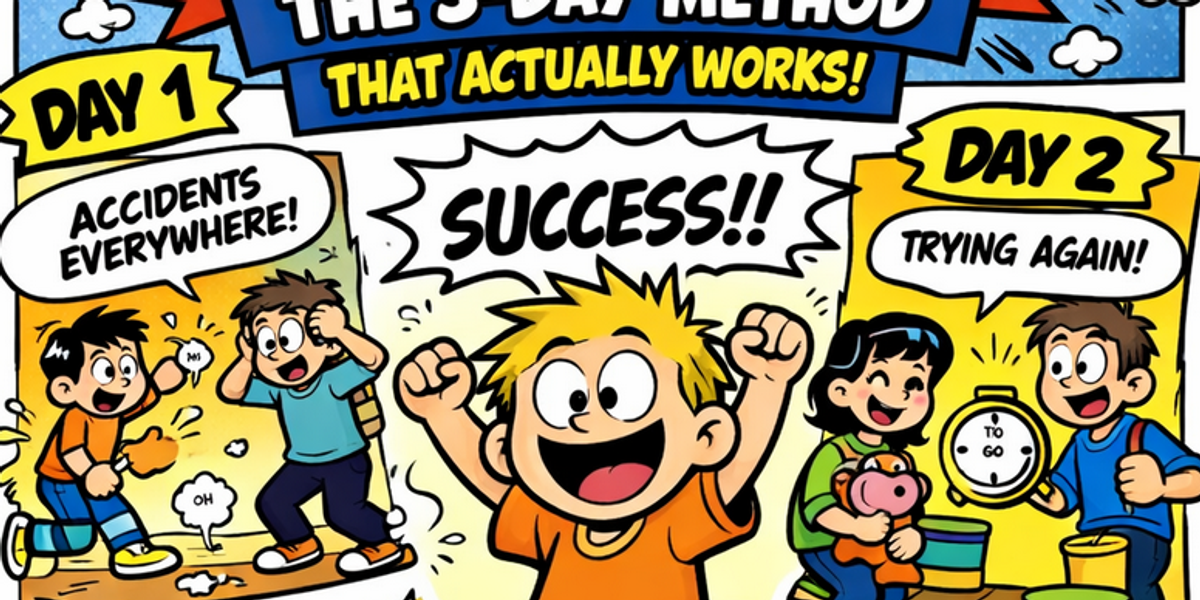
Potty Training Wars? The 3-Day Method That Actually Works
You've read the books, bought the special underwear, and tried the sticker charts. But your toddler is still having accidents, refusing the potty, or melting down at the mention of it. You're exhausted, doubting yourself, and wondering if you're ruining them forever. You're not—and there's a method that works for most families without the toxic positivity or impossible expectations.
Try This Tomorrow
Before we dive into the full strategy, here's something you can try right now:
- ✓Clear your calendar for three consecutive days at home (yes, really—this is key)
- ✓Buy a small potty chair and place it in the room where your child plays most
- ✓Let your child pick out 6-8 pairs of "big kid" underwear they're excited about
- ✓Stock up on cleaning supplies and extra sheets (you'll need them)
The Complete 3-Day Action Plan
1. Prepare the Day Before
This method only works if you're truly ready to commit three full days at home with zero outings.
WHAT TO DO:
- Remove all diapers and pull-ups from sight (except for nighttime)
- Set up potty chairs in 2-3 locations around your home
- Prepare easy meals and snacks you can make one-handed
- Charge devices and set up activities you can do near the potty
- Text friends and family that you'll be unreachable for three days
WHY THIS WORKS:
Toddlers need consistency and environmental cues. If diapers are an option, they'll choose them. Removing them completely eliminates confusion about what's expected.
"Tomorrow we're going to start wearing big kid underwear like [older sibling/character they admire]. No more diapers during the day!"
Say this excitedly but matter-of-factly the night before. Don't make it a question.
2. Day One: Stay Close and Watch
The first day is the hardest. You'll question everything. That's normal.
WHAT TO DO:
- Put your child in underwear or naked from the waist down immediately after waking
- Offer the potty every 20-30 minutes without asking ("Potty time!" not "Do you need to go?")
- Stay within arm's reach of your child all day
- Give them lots of fluids (water, milk, diluted juice)
- Celebrate successes enthusiastically but briefly
- Clean up accidents calmly without punishment or lectures
WHAT TO SAY WHEN ACCIDENTS HAPPEN:
"Oops, pee came out! Pee goes in the potty. Let's try sitting on the potty now."
Say this neutrally, not angrily. You're teaching, not punishing.
WHAT TO SAY WHEN THEY SUCCEED:
"You did it! You put pee in the potty! High five!"
Then move on. Don't make it a 10-minute celebration every time.
WHY THIS WORKS:
Toddlers learn through repetition and immediate cause-and-effect. They need to feel what it's like when pee comes out without a diaper catching it. The discomfort motivates them to try the potty. Your calm response to accidents teaches them this is a learning process, not a moral failing.
3. Day Two: Start Recognizing the Pattern
Day two often feels worse before it gets better. Don't give up.
WHAT TO DO:
- Continue offering the potty every 20-30 minutes
- Watch for their specific "I need to go" signs (grabbing themselves, squirming, getting quiet)
- When you notice their signs, guide them quickly to the potty: "Your body is telling you! Let's run to the potty!"
- Keep them in underwear all day, including nap time
- Reduce fluid intake slightly if they're completely overwhelmed
WHY THIS WORKS:
By day two, they're starting to connect the physical sensation with the need to go. Your job is to help them recognize their body's cues before it's too late. Most toddlers have 1-2 successful potty trips on day two.
"I see you holding yourself. That means your body needs to use the potty. Let's go!"
Use their body's signals as the teacher, not your nagging.
4. Day Three: Build Confidence
You should see real progress today. Not perfection—progress.
WHAT TO DO:
- Extend the time between prompted potty breaks to 30-45 minutes
- Let them try to recognize their own signals and ask (but still offer regularly)
- Practice a very short outing if they've been accident-free for 3+ hours (quick trip to mailbox, around the block)
- Stick to the routine even when they resist
WHY THIS WORKS:
Confidence builds competence. By day three, their body is starting to communicate with their brain more reliably. They're not trained yet, but they're learning the skill.
"You've been keeping your underwear dry! Your body is learning. Before we [activity], let's try the potty."
Acknowledge their progress without pressure.
5. The Week After: Stay Consistent
The three days are just the intensive start. Real training continues for weeks.
WHAT TO DO:
- Offer the potty before every transition (leaving house, before meals, before naps)
- Keep them in underwear at home, use pull-ups only for long car rides if needed
- Expect accidents, especially during play or when they're distracted
- Continue nighttime diapers until they're consistently dry in the morning (this can take months—that's normal)
WHAT TO SAY WHEN REGRESSION HAPPENS:
"Accidents happen while you're learning. Let's clean up and try again."
Repetition without shame is everything.
WHY THIS WORKS:
Potty training isn't a three-day miracle. It's a skill that takes weeks to solidify. The three-day method jumpstarts the process by removing the safety net, but consistency over time is what makes it stick.
What This Looks Like in Real Life
Marcus had been casually trying to potty train his 2.5-year-old daughter for two months with zero progress. After one long weekend using this method, she had about 60% success by day three. Within two weeks, she was reliably using the potty at home with only occasional accidents when she was really absorbed in playing. Three months later, she still wears pull-ups at night, but daytime is solid. Not perfect, not fast, but it worked.
When Things Don't Go as Planned
Why This Works (The Nerdy Stuff)
Developmental readiness matters more than age.
Most toddlers' bodies are physically ready between 20-30 months, but their brains need time to connect the sensation of a full bladder with the action of using the potty. This method works because it removes the confusion of sometimes using diapers and sometimes using the potty. Their brain learns faster with consistency.
The three-day intensive approach leverages neuroplasticity.
When you dedicate three full days to repetition and immediate feedback, you're literally helping your child's brain build new neural pathways. Every accident that they feel and every success they experience strengthens the connection between sensation and action.
Why we don't ask "Do you need to go?"
Most toddlers don't recognize their body's signals yet, so they'll always say no. By offering the potty on a schedule, you're teaching them what those sensations mean before they can articulate them. You're the external cue until their internal cues develop.
The psychology of commitment.
When you remove diapers completely during the day, you're making a clear boundary: this is how we do things now. Toddlers thrive on clear expectations. The wishy-washy approach of "try the potty sometimes" creates confusion. This method creates clarity.
You've Got This
Give this a full three days before deciding if it's working. Most kids have at least 3-4 successful potty trips by day three, but some take longer. If your child isn't showing any progress by day five, they might not be developmentally ready yet. Wait a month and try again. That's not failure—that's responsive parenting.
You won't execute this perfectly. You'll forget to offer the potty, you'll get impatient, you'll second-guess yourself hourly. That's normal. What matters is that you keep trying and you stay calm most of the time. Perfect parenting doesn't exist, but good-enough parenting absolutely works.
This phase is exhausting and messy and makes you question your life choices. But it's temporary. In a few months, this will be behind you. You're teaching your child a skill that will serve them for life. Small steps, lots of grace, and realistic expectations. You've got the tools now. You've got this.
Related Posts

Up All Night With a Scared Kid? 5 Steps That Actually Help
Woken up three times tonight by a scared or restless child? You're not failing — nighttime fears are brutal. Here's a realistic, step-by-step plan to help everyone sleep better, starting tonight.

Saying Everything Twice? 5 Steps to Get Kids to Listen the First Time
You've said it five times and they still haven't moved. Here's why repeating yourself isn't working — and a practical system that actually gets kids to respond the first time you ask.

Restaurant Meltdowns? 5 Steps to Actually Enjoy Eating Out
Eating out with kids doesn't have to mean survival mode. Here's a practical system that makes restaurant meals actually enjoyable — for everyone at the table.