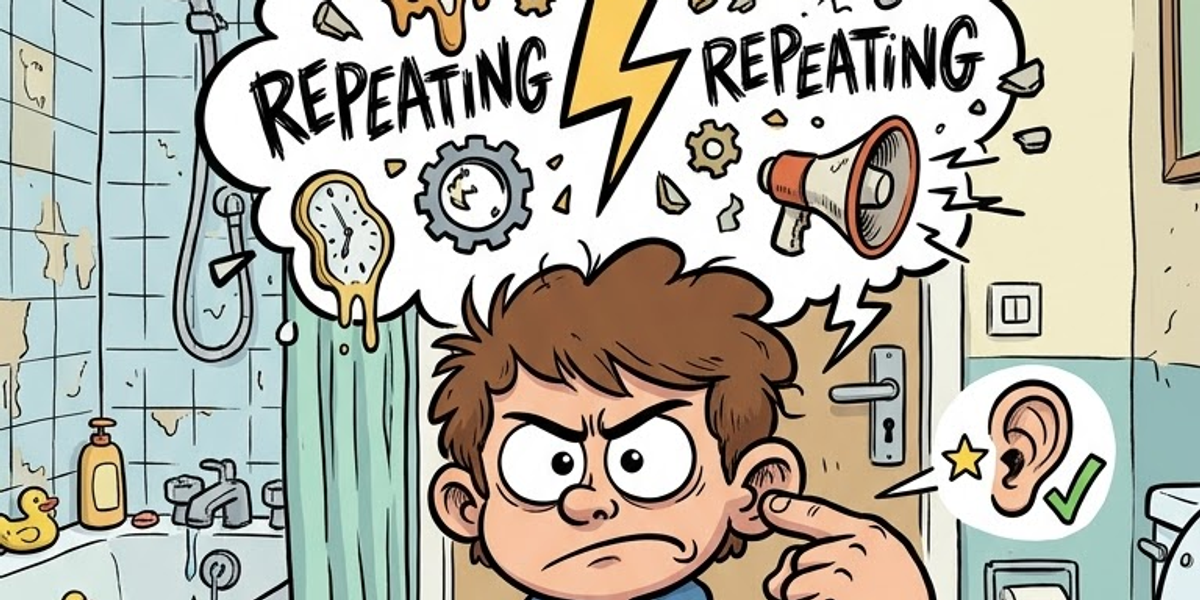
Saying Everything Twice? 5 Steps to Get Kids to Listen the First Time
You asked once. Then twice. Then louder. Now you're frustrated, they're tuning you out, and somehow you're the one who feels like the problem. You're not. But the repeating is part of the cycle — and you can break it.
Try This Today
Before you read the full system, here's something that works immediately:
- ✓Stop talking from another room. Walk to where your child is, make eye contact, then speak. Every time.
- ✓Say it once, then wait 5 full seconds in silence. Don't fill the gap. Let the pause do the work.
- ✓Use their name first: *"[Name]. Shoes on, please."* — not *"Can you put your shoes on?"* Name first, then the ask.
- ✓Lower your voice instead of raising it. A quieter voice makes them lean in rather than tune out.
The 5-Step System
1. Get Close and Make Contact First
Most ignored requests are shouted from a distance — and distance makes it easy not to hear, or not to register.
WHAT TO DO:
- Walk to within arm's reach of your child before speaking
- Wait until you have their eyes — not their body turned away, their eyes
- Crouch to their level for younger children (under 7)
- Touch their shoulder gently if they're absorbed in something
WHY THIS WORKS:
A request shouted from the kitchen while they're absorbed in play doesn't reach the part of the brain that decides to act. Proximity and eye contact shift their attention before you speak — so your words actually land.
"[Name], look at me for a second."
Wait until they do. Then make your ask. This takes 10 extra seconds and changes everything.
2. Make Requests Clear and Direct
Questions get ignored. Instructions get followed. These are not the same thing.
WHAT TO DO:
- Replace questions with statements: "Time to brush teeth" instead of "Can you brush your teeth?"
- Use the fewest words possible — shorter instructions are harder to tune out
- Say what you want them to do, not what you want them to stop doing
WHY THIS WORKS:
When you ask a question, you're inviting a yes or no — and kids often choose no. A clear, calm instruction removes the negotiation before it starts. Fewer words means less to argue with.
"Shoes on. Two minutes." or "Dinner table, now please."
Not: *"How many times do I have to ask you to come to dinner?"*
3. Give One Warning, Then Follow Through
Repeating yourself trains kids to wait for the tenth ask. A single warning followed by action resets that pattern — but only if you follow through every time.
WHAT TO DO:
- After one clear instruction, give one warning if needed: "I'm going to ask once more."
- Then act — don't ask again. Move toward the consequence or the next step
- Keep consequences small, immediate, and directly connected to the behavior
- Be consistent. Once means once — even when you're tired
WHY THIS WORKS:
Kids are pattern-readers. If asking ten times has always worked, they'll wait for ten. When you consistently act after one warning, they quickly learn that the first ask is the real ask. This shift usually takes one to two weeks of consistency to stick.
"I asked you to put your shoes on. I'm only going to say it one more time. If they're not on in two minutes, we leave without them and you carry them."
Then stop talking. Start the clock.
4. Acknowledge Before You Ask
Kids — especially in the middle of play — resist sudden transitions. A two-second acknowledgment before your ask reduces resistance dramatically.
WHAT TO DO:
- Name what they're doing before you interrupt it: "I see you're in the middle of building that."
- Give a heads-up when possible: "Five minutes until dinner." (then follow up at two minutes)
- Avoid launching straight into the ask without any acknowledgment
WHY THIS WORKS:
Abrupt transitions spike frustration. When kids feel seen and given a heads-up, they're less likely to dig in their heels. It's not about giving in — it's about giving them a moment to mentally prepare. That tiny buffer makes a real difference.
"You've got five more minutes with that, then it's bath time. I'll let you know when it's time."
Then actually come back and give the two-minute warning.
5. Stop Repeating — and Stop Rescuing
Every time you ask again, you teach your child that the first ask didn't count. And every time you handle the consequence yourself to avoid the hassle, you reset the lesson.
WHAT TO DO:
- Say it once, clearly. Then wait.
- If they don't respond, move to the natural consequence — don't repeat the instruction
- Resist the urge to remind, nudge, manage, or do it yourself
- Let small discomforts happen: the forgotten snack stays at home, the late shoes mean a rushed walk
WHY THIS WORKS:
Natural consequences are more effective teachers than your voice. When your child experiences the direct result of not responding — not a lecture, not a repeated ask, just the thing that happens — they connect behavior to outcome far faster than they do through repetition.
"I already asked. I'm not going to ask again."
Then stay quiet. This is genuinely hard, especially when you're in a hurry. But it's the step that makes everything else stick.
What This Looks Like in Real Life
Kira's 7-year-old had learned to wait for the third or fourth ask before moving. She'd tried raising her voice, taking things away, everything. She started using the close-and-contact rule — walking to him every single time before asking — combined with one warning and then following through.
The first week, he tested her constantly. She had to follow through on small consequences more than she expected. By week two, he started moving on the first ask about half the time. By week four, one ask worked more often than not.
He still has selective hearing on the things he really doesn't want to do. But the baseline has shifted — and Kira says she stopped feeling like she was yelling all day, which changed the whole mood of their house.
When Things Don't Go as Planned
Why This Works (The Nerdy Stuff)
When kids don't respond the first time, it's almost never defiance — it's usually attention. The brain has a limited capacity for switching focus, especially when engaged in something stimulating. Play activates the reward system in children's brains intensely. Asking them to stop mid-play is neurologically similar to asking an adult to put down their phone mid-sentence. It's genuinely hard.
Repeating yourself actually makes the problem worse over time. When a parent repeats requests, the child's brain learns to filter out the early asks — they're not real signals, just noise before the real signal (the raised voice, the tenth ask) arrives. You've accidentally trained their attention system to wait.
What resets this is changing the signal. Proximity, eye contact, clear language, and consistent follow-through combine to create a new pattern: one ask, one response. The brain is a prediction machine — once your child's brain learns that the first ask reliably leads to action, it stops waiting for the tenth.
For children under 5, developmental context matters too. The prefrontal cortex — responsible for inhibiting what they're doing and shifting attention — is still very early in its development. Young children aren't ignoring you on purpose. They're working with a brain that genuinely struggles to switch gears. Shorter instructions, closer proximity, and gentler transitions help bridge that gap.
You've Got This
Give this two weeks before you decide it isn't working. The first week usually feels harder — because you're holding firm instead of repeating, and that creates more friction before it creates less. Most families see a genuine shift in week two. Stick with it.
You'll repeat yourself sometimes. You'll raise your voice. You'll skip steps because you're exhausted and just need them to put their shoes on. That's fine. Come back to the system the next day without making it a production.
You're not raising a kid who doesn't listen. You're recalibrating a communication pattern that drifted — and that's fixable. One ask, one response. It takes time, but it builds. You've got this.
Related Posts

Up All Night With a Scared Kid? 5 Steps That Actually Help
Woken up three times tonight by a scared or restless child? You're not failing — nighttime fears are brutal. Here's a realistic, step-by-step plan to help everyone sleep better, starting tonight.

Restaurant Meltdowns? 5 Steps to Actually Enjoy Eating Out
Eating out with kids doesn't have to mean survival mode. Here's a practical system that makes restaurant meals actually enjoyable — for everyone at the table.

Can't Finish a Sentence? 5 Steps to Stop Constant Interrupting
You can't finish a single thought without 'Mom! Mom! Mom!' cutting you off. You're not alone — and there's a realistic system that teaches kids to wait without a meltdown.