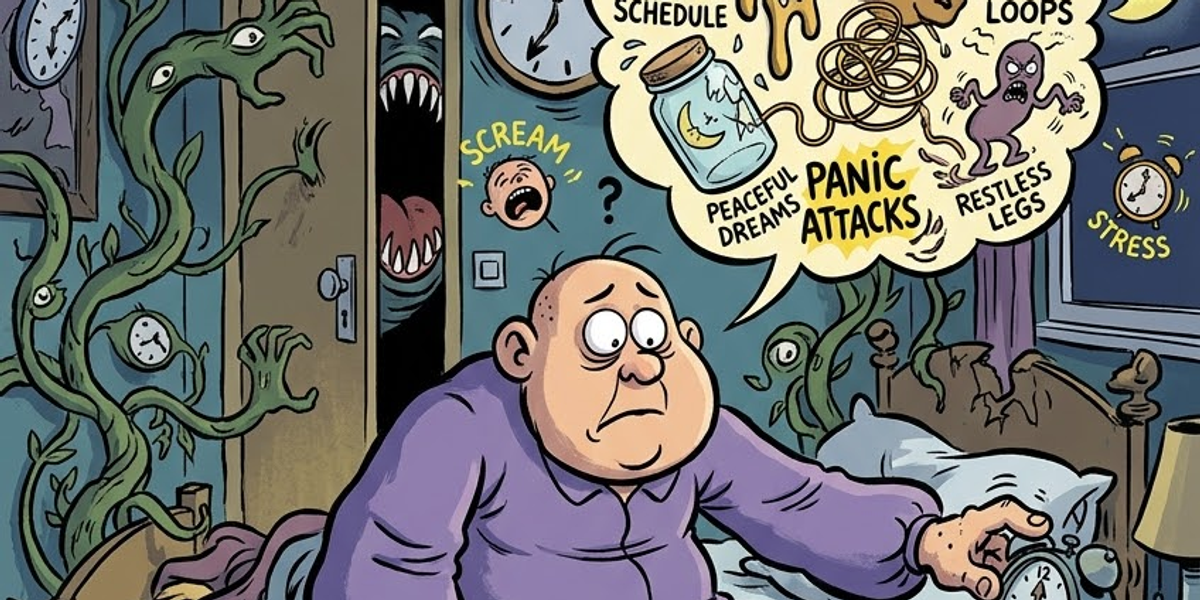
Up All Night With a Scared Kid? 5 Steps That Actually Help
It's 2am. Again. Your child is crying, scared, or just... awake — and so are you. You're exhausted, you've tried everything, and you're starting to wonder if you're doing something wrong. You're not. And there is a way through this.
Start Here Tonight
Before we get into the full plan, here's what you can do right now:
- ✓Skip the long reassurances. A calm, brief "You're safe, I'm here" works better than a 10-minute explanation at 2am.
- ✓Don't turn on bright lights. A small nightlight or dim hallway glow keeps their brain in sleep mode.
- ✓Stay until they're calm — not until they're asleep. Sit with them for 2-3 minutes, then say goodnight again and leave.
- ✓Say the same words every time. Predictability is calming. Pick a phrase and repeat it every single night.
The 5-Step System
1. Know What You're Actually Dealing With
Nightmares, night terrors, and general restlessness are different — and they need different responses.
WHAT TO DO:
- Nightmare: Your child wakes up, remembers being scared, and can talk to you. They need comfort and reassurance.
- Night terror: Your child seems awake but isn't — they may scream, thrash, or stare blankly and won't recognize you. Don't try to wake them. Stay calm, keep them safe, and wait. It passes in 5-15 minutes.
- Frequent waking: Your child wakes often but isn't distressed — just restless. This is usually about sleep cycles and sleep associations.
WHAT TO SAY (FOR NIGHTMARES):
"That was a scary dream. Dreams aren't real. You're safe in your bed, and I'm right here."
Say it softly, repeat it if needed, and keep your voice steady even if you're half asleep yourself.
WHY THIS WORKS:
Responding differently to each type stops you from accidentally making things worse. Trying to wake a child mid-night terror, for example, can extend it and increase distress for both of you.
2. Build a Solid Wind-Down Routine
What happens in the hour before bed matters more than you'd think.
WHAT TO DO:
- Turn off screens at least 30 minutes before bed (blue light disrupts melatonin).
- Do the same routine in the same order: bath, PJs, teeth, story, lights out.
- Add a "worry dump" step for older kids (ages 5+): ask them to name one worry before bed so it doesn't ambush them at night.
- Keep the bedroom cool, dark, and quiet. White noise helps if the house has sounds.
WHY THIS WORKS:
A predictable routine signals the nervous system that it's safe to relax. Kids who know exactly what's coming next feel calmer going into sleep.
"Let's do our wind-down. First bath, then story, then sleep. What book do you want tonight?"
Giving them one small choice makes them feel in control without derailing the routine.
3. Deal With Fears Before Bedtime — Not During
Trying to talk through a fear at midnight rarely helps. It usually escalates things.
WHAT TO DO:
- During the day (not at night), ask your child what feels scary about bedtime or sleep.
- Validate the fear without feeding it: don't say "there's nothing to be scared of" — say "that sounds really scary, and you're safe."
- Make a "brave at bedtime" plan together: a stuffed animal protector, a special phrase, a nightlight placement they choose.
- For monsters specifically: monster spray (water in a bottle), a "no monster" sign they decorate, or a stuffed animal guard are all surprisingly effective.
WHY THIS WORKS:
Letting your child co-create their comfort strategy gives them ownership over their own fear. That sense of control is more powerful than any reassurance you can offer.
"I hear you — that dream felt really real and really scary. You're safe now. What would help you feel brave at bedtime tomorrow?"
4. Respond Consistently (Not Perfectly)
The most important thing isn't what you do — it's that you do the same thing every time.
WHAT TO DO:
- Decide on your response before tonight: will you stay in their room for 2 minutes or 5? Will you walk them back to their bed or let them come to yours? Pick one and stick with it for at least a week.
- If you're gradually moving toward independent sleep: start by sitting next to the bed, then move to the doorway over several nights, then to the hallway.
- Don't negotiate at 2am. Keep responses warm but brief.
WHY THIS WORKS:
Kids' brains are wired to test whether the rules still apply. Consistency — even imperfect consistency — teaches them that nighttime is predictable, and predictable feels safe.
"I love you. You're safe. Time to sleep. I'll see you in the morning."
Say it, mean it, and leave (or dim your presence). Same words. Every time.
5. Take Care of the Daytime Too
Nighttime struggles are often daytime problems in disguise.
WHAT TO DO:
- Make sure your child is getting enough physical activity during the day — tired bodies sleep better.
- Watch for overtiredness (counterintuitively, overtired kids sleep worse and wake more).
- Check that bedtime isn't too late: most kids ages 3-10 do best between 7-8:30pm.
- If anxiety seems to be driving the nighttime fears, look for daytime signs: clinginess, stomach complaints, reluctance to try new things. These can be worth mentioning to your pediatrician.
WHY THIS WORKS:
Sleep is a 24-hour system. Adjusting daytime habits — exercise, screen time, nap schedules — often makes a surprising difference at night.
What This Looks Like in Real Life
Maya's 4-year-old had been waking every night for three weeks after a scary movie at a birthday party. Maya was running on four hours of sleep and starting to dread bedtime herself.
She started with the daytime fear conversation — sitting on the couch at 4pm, not at midnight — and let her daughter design her own "brave kit": a flashlight, a stuffed lion named Guard, and a sign on the door.
The first week was still rough. There were still wake-ups. But by day five, they dropped from three or four times a night to once. By two weeks in, her daughter was sleeping through most nights.
It wasn't magic. It was consistent, and it worked.
When Things Don't Go as Planned
Why This Works (The Nerdy Stuff)
Children's brains aren't miniature adult brains — the prefrontal cortex (the part that handles logic and emotional regulation) isn't fully developed until the mid-20s. That means when your child is scared at 2am, they literally cannot talk themselves down the way you can. They need a co-regulator: someone calm to borrow regulation from.
Night terrors are driven by the transition between deep sleep stages and are most common between ages 3-8. They're not caused by psychological trauma (though stress can increase frequency). Most kids outgrow them completely.
Nightmares, on the other hand, happen during REM sleep and peak between ages 3-6. Research shows that daytime anxiety — even low-level, normal anxiety — directly increases nightmare frequency. Addressing the anxiety during waking hours is one of the most effective tools.
Consistency works because of how children build internal models of the world. When the response is the same every time, the brain learns: *nighttime is safe, a predictable thing happens, I can relax*. That model gets built over days and weeks, not overnight.
You're Not Failing. You're Just Tired.
Give this system a week. Most families see real improvement within 4-5 days — not perfection, but progress. Some kids take a bit longer, and that's okay.
You won't do every step perfectly. There will be nights where you cave and stay too long, or you lose your patience, or you forget everything you just read at 3am when you're barely conscious. That's not failure. That's parenting.
What matters is that you show up tomorrow night and try again. The consistency doesn't have to be perfect — it just has to be more consistent than before.
You've got tools now. You've got a plan. Sleep is coming.
Related Posts

Saying Everything Twice? 5 Steps to Get Kids to Listen the First Time
You've said it five times and they still haven't moved. Here's why repeating yourself isn't working — and a practical system that actually gets kids to respond the first time you ask.

Restaurant Meltdowns? 5 Steps to Actually Enjoy Eating Out
Eating out with kids doesn't have to mean survival mode. Here's a practical system that makes restaurant meals actually enjoyable — for everyone at the table.

Can't Finish a Sentence? 5 Steps to Stop Constant Interrupting
You can't finish a single thought without 'Mom! Mom! Mom!' cutting you off. You're not alone — and there's a realistic system that teaches kids to wait without a meltdown.