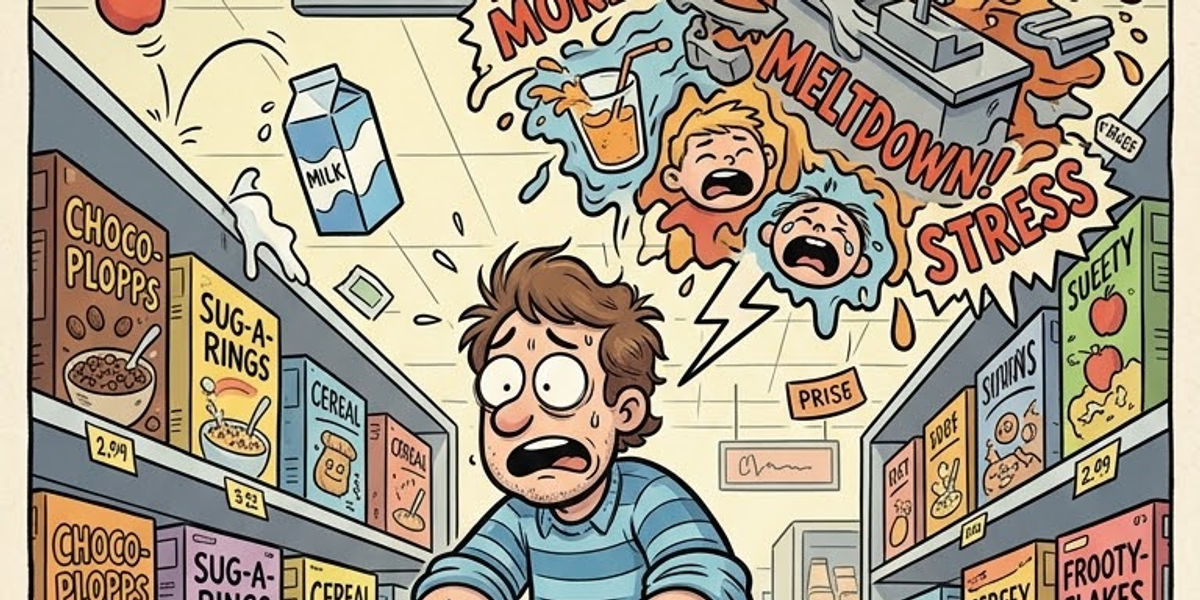
Grocery Store Meltdowns? 5 Tricks That Actually Work
You've got a cart, a list, and a child who just spotted the candy aisle. Three minutes later, you're that parent — the one everyone's staring at while your kid melts down next to the yogurt. You're not alone. And it doesn't have to keep going this way.
Try This Tomorrow
Before we dive into the full strategy, here's something you can try right now:
- ✓Feed your child a snack before you even leave the car. Hungry kids are ticking time bombs.
- ✓Give them one job. Hand them the list and say, "You're in charge of finding the apples."
- ✓Set the rule before you walk in. "We're not buying treats today. You can pick which yogurt flavor though."
- ✓Bring one small distraction. A favorite small toy or audiobook for the cart.
Here's What Works: The 5-Step System
1. Fuel Up Before You Go
A hungry child in a grocery store is a recipe for disaster. Every single time.
WHAT TO DO:
- Give a protein-based snack 20–30 minutes before leaving (cheese, peanut butter, a hard-boiled egg)
- Bring a water bottle they can hold in the cart
- Skip the trip if it's right before a nap or at the tail end of a long day
WHY THIS WORKS:
Low blood sugar hits kids fast and hard. Their brains literally can't regulate emotions well when they're hungry. This one step alone removes a huge trigger.
"We're going to eat a snack before we shop so we don't get hungry and grumpy in the store."
2. Give Them a Job Before You Walk In
Kids act out when they feel powerless. A job changes that dynamic instantly.
WHAT TO DO:
- Let them carry the (small) basket or push the mini cart if your store has them
- Give them 2–3 items to "find" from the list
- Let older kids check items off on your phone
WHY THIS WORKS:
Giving kids a role activates their sense of competence. They're focused on the mission, not on begging for snacks.
"I need your help today. You're in charge of finding the bread and the bananas. Can you do that?"
Say this before you enter — not after the meltdown starts.
3. Set the Expectation (and the Limit) Before You Go In
Surprises cause meltdowns. Warnings prevent them.
WHAT TO DO:
- In the parking lot, tell them exactly what's happening: how long you'll be, what you're buying, and what's not happening
- Name the one choice they DO get to make
- Keep it short — one or two sentences
WHY THIS WORKS:
Children's brains crave predictability. When they know what to expect, they're far less likely to test limits. The "one choice" keeps them engaged without opening the floodgates.
"We're getting 10 things today and then we're done. No toys or candy today — but you get to pick which kind of crackers we buy. Deal?"
4. Narrate and Engage the Whole Way Through
A bored kid is a trouble-making kid. Keep them in the action.
WHAT TO DO:
- Talk through what you're picking and why ("Do we want the big one or the small one?")
- Play simple games: "Can you find something orange on this shelf?"
- Count items together as they go in the cart
- Give running commentary: "We just need two more things and then we're done!"
WHY THIS WORKS:
Engagement kills boredom, and boredom is the enemy. When their brain is busy, it's not looking for ways to escalate.
"Okay, we've got 5 things. We need 5 more. Help me count!"
5. Have a Calm Response Ready for When It Starts
Sometimes it happens anyway. That doesn't mean you've failed. It means they're a kid.
WHAT TO DO:
- Drop your voice instead of raising it (this signals safety, not threat)
- Get down to their eye level if possible
- Name what you see without negotiating
- Don't abandon the cart in panic — unless you need to leave, finish the trip
WHY THIS WORKS:
Lowering your voice and naming their emotion activates the thinking part of their brain. Yelling adds fuel. Calm adds brakes.
"I can see you're having big feelings right now. We're going to finish shopping, and then we'll go home. I'm right here."
If it escalates: "We have two choices — calm bodies finish shopping, or we leave now and come back without you next time."
What This Looks Like in Real Life
Marta's 4-year-old, Theo, turned every grocery trip into a battle over the cookie aisle. She started giving him the job of "list checker" on her phone and feeding him a snack in the car first. The first trip, he still asked for cookies — but she used the script and he accepted it. By the third trip, he was more interested in his job than the candy. It's not perfect every time. But it's manageable now, and that's everything.
When Things Don't Go as Planned
Why This Works (The Nerdy Stuff)
Kids under 6 are working with a prefrontal cortex that's still very much under construction. That's the part of the brain that handles impulse control, emotional regulation, and delayed gratification. It won't be fully developed until their mid-twenties.
Related Posts

Up All Night With a Scared Kid? 5 Steps That Actually Help
Woken up three times tonight by a scared or restless child? You're not failing — nighttime fears are brutal. Here's a realistic, step-by-step plan to help everyone sleep better, starting tonight.

Saying Everything Twice? 5 Steps to Get Kids to Listen the First Time
You've said it five times and they still haven't moved. Here's why repeating yourself isn't working — and a practical system that actually gets kids to respond the first time you ask.

Restaurant Meltdowns? 5 Steps to Actually Enjoy Eating Out
Eating out with kids doesn't have to mean survival mode. Here's a practical system that makes restaurant meals actually enjoyable — for everyone at the table.