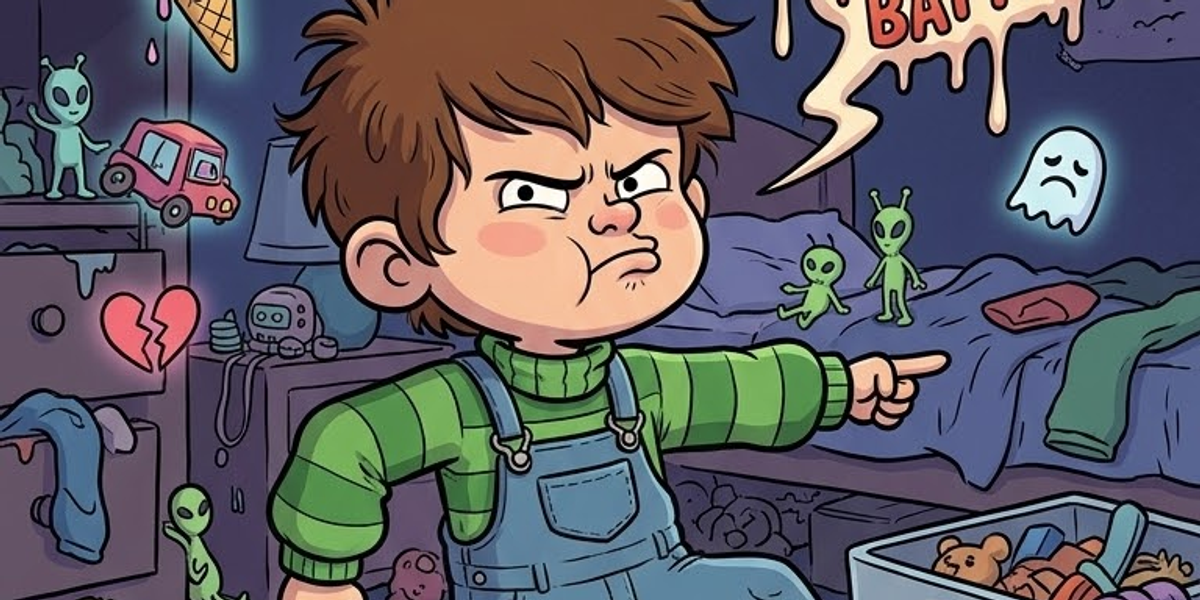
Toys Everywhere? The Clean-Up System That Actually Sticks
You've asked four times. Maybe five. The toys are still on the floor, your kid is still watching their show, and you're about to lose your mind. You're not doing it wrong — and there's a system that actually works without turning every evening into a standoff.
Start Here Tonight
Before we get into the full plan, try this right now:
- ✓Pick ONE spot and put a bin there — no labels needed yet, just one spot for stuff
- ✓Set a timer for 5 minutes and clean up together (not watching them, actually helping)
- ✓Say this: *"Race me. Let's see if we can fill the bin before the timer goes off."*
- ✓Leave it there — don't fix, sort, or reorganize after. Done is done.
The 5-Step System
1. Shrink the Problem First
If clean-up feels overwhelming to you, imagine how it feels to a 5-year-old. Too many toys = too hard a job. Start by reducing what's out.
WHAT TO DO:
- Do a quiet toy rotation — put half the toys in a box in a closet
- Bring them back in 2-3 weeks (they'll feel brand new)
- Keep only what fits in the dedicated play space
WHY THIS WORKS:
Kids get overwhelmed by visual clutter the same way adults do. A smaller, manageable space makes clean-up feel possible instead of impossible.
"We're going to put some toys on vacation so the others have more room."
Frame it as a positive change, not a punishment. Do this without your child if possible — less negotiation.
2. Create a Visual System (Not Just Rules)
Telling kids "clean up your room" is like telling someone to "be organized." Vague instructions produce vague results. They need to *see* where things go.
WHAT TO DO:
- Use bins, not shelves — things get thrown in, not placed perfectly
- Label bins with pictures (for young kids) or words (older kids)
- Keep categories simple: cars, blocks, stuffed animals, art stuff
WHY THIS WORKS:
Young kids can't generalize "put things away" — they need a specific answer to "where?" A clear home for each category removes the guesswork.
"Where does this go? Show me its home."
Ask, don't tell. It shifts the responsibility gently.
3. Build the Trigger, Not the Rule
Nagging doesn't work because it puts you in charge of remembering. A consistent trigger puts the routine on autopilot — for both of you.
WHAT TO DO:
- Pick one consistent clean-up time (before dinner, before bath — same every day)
- Use a signal: a song, a timer, a specific phrase — always the same one
- Don't remind more than once. The trigger is the reminder.
WHY THIS WORKS:
Routines reduce friction because the brain stops treating them as decisions. After a week or two, the trigger does the work so you don't have to.
"You know what time it is — clean-up song!"
Then start the song or timer. Don't negotiate. Don't explain. Just start.
4. Be There — But Shrink Your Role Over Time
Young kids can't clean up independently at first. That's not defiance, it's development. Your presence is part of the system — for now.
WHAT TO DO:
- Week 1-2: Clean up together, side by side
- Week 3-4: Start the task together, then step back after 2 minutes
- Week 5+: Give the trigger, check in halfway, praise the finish
WHY THIS WORKS:
Gradual release builds independence without abandoning them mid-task. Each week you do slightly less — until the habit is theirs, not yours.
"I'll do the books, you do the cars. Ready? Go."
Divide and conquer. Specific jobs are easier than "clean up everything."
5. Make the Finish Line Feel Good
Clean-up doesn't have to be neutral. If it consistently ends with something pleasant, kids start to associate the effort with the reward — without you bribing them every single time.
WHAT TO DO:
- After clean-up, do something cozy together: a snack, a short show, story time
- Notice and name what they did: "You put every block in the bin. That's the whole job."
- Don't critique how it was done — a messy bin still counts
WHY THIS WORKS:
The brain learns from what follows an action. When clean-up reliably leads to something good, the resistance drops — not immediately, but steadily.
"Room looks good. You did that. Now let's go pick your show."
Short. Direct. No lecture about how long it took.
What This Looks Like in Real Life
Jenna's 4 and 7-year-old shared a playroom that looked like a toy store had exploded in it every single evening. She had tried reward charts, counting to three, threatening to throw toys away — nothing lasted more than a week. She did the toy rotation (cut the toy count by half) and introduced a clean-up song as the trigger before bath time.
The first three days were still a battle. But by day 6, her 4-year-old started singing the song *herself* when bath time got close. The 7-year-old still grumbled, but he did it. A month later, Jenna stopped dreading evenings. The floor isn't perfect. But it's manageable — and nobody's screaming anymore.
When Things Don't Go as Planned
Why This Works (The Nerdy Stuff)
Children under 7 are still developing what's called executive function — the mental skills that help us plan, organize, and initiate tasks. Asking a 4-year-old to "clean up" is asking them to use skills their brain hasn't fully built yet. That's not attitude. That's neuroscience.
Habits are formed through consistent cues (the trigger), routines (the action), and rewards (what comes after). This is the habit loop, and it works for kids the same way it works for adults. Once the loop is established, the cue does the motivating — you don't have to.
Research on household chores consistently shows that children who do regular tasks have stronger self-esteem, better executive function, and a greater sense of contribution to the family. The goal isn't a tidy house. It's a kid who knows they're capable.
The toy rotation works because of something called "habituation" — brains stop noticing things that are always there. Fewer toys means more engagement, less overwhelm, and a clean-up job that doesn't feel like climbing a mountain every night.
You've Got This
Give this two weeks. The first few days will probably feel the same as before. Somewhere in week two, you'll notice the resistance is slightly lower, the job goes slightly faster. That's the system starting to work.
You'll forget to do the trigger some nights. You'll clean up yourself when you're too tired. You'll have a week where it all falls apart. That's not failure — that's a normal family. Come back to the system, no drama, no restart speech.
You're not raising a messy kid. You're building a habit that takes time. The effort you're putting in right now is exactly what parenting looks like. You've got this.
Related Posts

Up All Night With a Scared Kid? 5 Steps That Actually Help
Woken up three times tonight by a scared or restless child? You're not failing — nighttime fears are brutal. Here's a realistic, step-by-step plan to help everyone sleep better, starting tonight.

Saying Everything Twice? 5 Steps to Get Kids to Listen the First Time
You've said it five times and they still haven't moved. Here's why repeating yourself isn't working — and a practical system that actually gets kids to respond the first time you ask.

Restaurant Meltdowns? 5 Steps to Actually Enjoy Eating Out
Eating out with kids doesn't have to mean survival mode. Here's a practical system that makes restaurant meals actually enjoyable — for everyone at the table.